Content Marketing: Transforming Business Since 1895

Recently I had the opportunity to attend a big-screen showing of The Story of Content: Rise of the New Marketing. What a great story!

The Story of Content: Rise of the New Marketing by the Content Marketing Institute
Image courtesy of the Content Marketing Institute

If you’re not familiar, the Content Marketing Institute made a documentary telling the story of content marketing — past, present and future.

Yes, content marketing has a past, and I’m not referring to 2015. In fact, John Deere has been succeeding at the art of content marketing since 1895, when it introduced The Furrow. Some of the earliest printed ads were prime examples of content marketing before the ad industry switched directions.

So where are we today? Content marketing is all the rage, but like any other form of marketing, it requires a strategy and commitment. While you may receive extensive engagement on one piece of content, content marketing is a long-term strategy, not an overnight success story.

However, if you stick with it and do it right, you’ll become a valuable resource to your clients, partners and online communities.

Looking for inspiration? The documentary contains real-world case studies of companies in various industries succeeding in the content marketing arena today. We also welcome you to check out some of our past posts on the subject.

Is your company interested in developing relationships and creating value with content marketing? Let’s talk about a strategy that’s right for you.

What brand excels at content marketing in your eyes?

All about the content,
Jaime

Let’s chat (about content marketing, your marketing needs or otherwise):
Facebook logo Twitter logo Instagram logo Pinterest logo LinkedIn logo

Mobile Marketing Customization 101: A Guide

All mobile marketing strategies are different—and some are better than others. Starting out on the right foot requires planning, but a slew of utilities capable of generating potent mobile strategies exist. The modern smartphone user is constantly connected, and approximately 60 percent of global mobile consumers utilize their mobile devices as exclusive Internet sources.

The numbers are growing, too. As mobile apps achieve dominance, new, creative marketing strategies emerge. Compiled lists of the world’s best mobile games have emerged, shedding light on the sheer magnitude surrounding our mobile culture.

Modern marketers need to create custom mobile strategies to stay afloat, using the best-available resources to reach their goals. If you’re new to mobile marketing, or if you’re redefining your strategy, customization is key. Check out our step-by-step guide below, and take advantage of a comprehensive, consumer-tailored mobile strategy.

Step One: Analyze Your Target Population

 Analyze Your Target Population

Mobile technology has enabled the new age of consumer-specific marketing. Unfortunately, analytical gathering tools are too strong. Too often, mobile marketers overshoot their audience, catering to the masses instead of much-in-need consumer segments.

Use analytics, and use analytics wisely. Target your consumer demographics, and look at the key statistics surrounding them. Consider the following questions, too:

  • What is your consumer’s smartphone of choice?
  • How many in-store visitors were directed via mobile?
  • What pages do your consumers visit?
  • What content are your consumers viewing?


Step Two: Make Your Website Mobile-Friendly

Your mobile website needs to be accessible. Customized mobile marketing can’t occur if the consumer is unable to garner feedback, connect to webmail lists, make e-purchases or store online points.

I’m sure you or someone you know has an iPhone, Android, Blackberry, etc. If you don’t have each of these devices handy, there are some really cool tools that you can use to see how your website would actually look and behave on just about any mobile device. Fifty seven percent of users say they won’t recommend a business with a poorly designed mobile site.

Such high numbers warrant a website cleanup. Fortunately, both Safari and Firefox offer innovative tools geared towards the web platform-minded. Streamline your user’s browsing potential to assist their entry to customized channels.


Step Three: Let Your Consumer Control Mobile Content

Let Your Consumer Control Mobile Content

Assuming your mobile strategy contains multimedia content—which it should, consumers should be able to navigate it with ease. Consumers love controlling their content, studies revealing that:
  • 86 percent of viewers skip television commercials.
  • 44 percent of direct mail isn’t opened.
  • 46 percent of website viewers state design is a determining factor.

All content on your platform should serve the consumer. Moreover, it should be flexible based upon their evolving needs. Customizable content isn’t customizable if it isn’t skippable, and a consumer dedicated to your mobile platform will reveal valuable information about useful media while exposing loose ends.

Step Four: Customize Via SMS

Customize via SMS

SMS marketing is one of the world’s leading developments. Text-to-vote platforms, in particular, are an emergent trend creating customized platforms able to promote relevancy and effective navigation. Your mobile strategy will jump miles if it includes such services.

Your SMS strategy should, however, offer opt-in options. In the same way consumers prefer mobile content, they heavily prefer SMS control. Make sure all opt-in services follow strict privacy guidelines, and never shove offers through their push notifications. Use analytics, divide your consumer base and show the consumer you, the marketer, know their wants and needs.

Step Five: Consider Wearable Technology

Wearables have made a big splash recently. Fitbits and mobile thermostats have redefined the way consumers engage daily life, and “Internet-enabled” objects will likely persevere in the future. Don’t wait. Hit off a customizable mobile strategy before the market rises.

Customizable marketing strategies tailor offers to the consumer’s wants and needs. They’re buyer-centric, and they generate appeal from astounding offers. Sure, location-based offers, QR codes and SMS coupons are important, but the best customizable platforms are emergent. To be an effective marketer, you need to be ahead of the curve. In-store offers, social media guarantees and email redemption amenities are fantastic tools, but your arsenal should be one of business climate surveillance, prospective reasoning and innovation.

Author Biography

Sophorn Chhay

Sophorn is an inbound marketer specializing in attracting targeted visitors and generating sales qualified leads. Through Trumpia’s mass text messaging automation solution he helps businesses and organizations communicate effectively with their customers or members. Watch Trumpia’s 5-Minute Demo on how to execute an effective mobile marketing strategy.

5 Smart Steps to Become a Better Small Business Owner

As an entrepreneur or small business owner, you dream big. That’s probably one reason you pursued this career path in the first place. Dreaming big is great, but it can also be paralyzing. Where do you start?

How to become a SocialMedia Manager by Urs Steiner via CC BY 2.0
Image credit: How to become a SocialMediaManager by Urs Steiner via CC BY 2.0

“Entrepreneurs are often defined by the size of our ambitions, but the best way to make a big impact is to start small steps.”                                                                -Damon Brown, entrepreneur & author

Damon Brown, entrepreneur and author of Our Virtual Shadow, recently published a smart article for Inc. entitled 21 Simple Ways to be a Better Entrepreneur. In it, he shares easy steps you can take to make yourself more efficient and productive in 2016 and beyond.

Here are our favorites:

  • Schedule a blank day: Yes, you’re busy, but that doesn’t do much for you or your business in the end. Scheduling a blank day (which isn’t a vacation day) can help you focus on the big picture and shift direction if needed. When’s the last time you’ve scheduled a blank day?

Please stop telling me you’re busy.

  • Skip the heavy lifting on Monday: Mondays are a drag. No one really looks forward to them and you’re rarely satisfied with your production. If you work over the weekend, Mondays are even worse. So take Brown’s advice and only handle light lifting on Mondays, if you can.

Your Comfort Zone: Where the Magic Happens

  • Write more, type less: How often do you physically write things down? Strategies, ideas, thoughts, musings… While we’re always fans of the written word, writing by hand can create stronger connections, motivate, inspire and help you relax.

Things I Carry: Pen and Paper

  • Walk more: Innovative ideas rarely come to us while we’re sitting behind a desk. Physical activity can be a wonderful way to break out of a rut or see a situation more clearly. Struggling to put together a plan for a client? Trying to make a difficult decision for your business? Get up and go for a walk. You (and your brain) will be glad you did.

Need an Idea? Just Walk Away…

  • Read a book a week: Entrepreneurs and small business owners need to be constantly learning, and books are the perfect way to accomplish this arduous task. They’re also a way to travel to other cultures, learn from other people’s mistakes and get lost in another world. Even if you’re not a writer, reading is a habit that you should develop.

Eat, Pray, Love — In Business Too

Who are we kidding? We loved Brown’s entire list, especially the coffee and poker suggestions. What are your favorites?

We do struggle with a couple of them, especially In the first hour of your day, avoid email and social media. Perhaps this is a goal we can tackle in 2016. Which suggestion(s) do you struggle with the most?

Whether you agree with Damon Brown’s suggestions or not, we all want to be more productive and efficient. What additional tips can you offer to achieve these goals in 2o16?

We can help you be more productive and efficient by assisting with your marketing, writing and social media needs. Let’s discuss how we can help you!

Taking small steps to dream big,
Jaime

Let’s chat (about entrepreneurship, your marketing needs or otherwise):
https://www.facebook.com/ClearlyConveyedCommunications/ https://twitter.com/jaimeshine https://instagram.com/jaimeshine https://www.pinterest.com/jaimeshine/ https://www.linkedin.com/in/jaimeshine/

2015: Storytelling, Platelets & Facebook, Oh My!

2015: what a long, strange road it’s been.

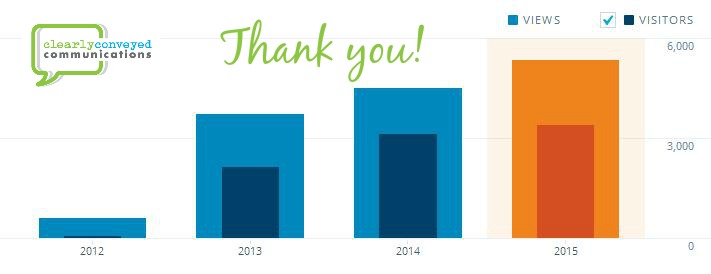
Our visitors and views climbed for the 4th straight year!

Thank you for visiting the CCC blog this year! We’re excited to see an increase in visitors and views for the 4th straight year, each year of our existence.

We publish a wide range of content and that showed in the diversity of our most viewed posts in 2015.

Our top 5 posts as voted by your eyeballs:

  1. The Psychology of Color: Following Guides or Going With Your Gut?
  2. To Give or Not To Give…
  3. 5 Things You Didn’t Know About Facebook
  4. Kindness in the Workplace: A Guide for Your Organization
  5. Mad Men: Master Storytelling In Any Era

Bonus: Things I Carry: Pen and Paper (missed the top 5 by 1 view)

As wide-ranging as our content is, it all leads back to our four main categories: marketing, writing, social media and personal reflection (including entrepreneurship/small business).

Our fourth most viewed post this year was written by one of our contributors, Carol Preibis from Ahh the Simple Life. If you would like to contribute an article (or series), check out our guest blogger invite.

We’ve had contributors from all over the world, just like our audience. Here are the top 5 countries that read our blog:

  1. United States
  2. United Kingdom
  3. Brazil
  4. India
  5. Canada

How did our visitors find us? Search engines refer most of our traffic, although social media plays a role too. Twitter, Pinterest and Facebook all sent readers to our front door.

We look at analytics to help us craft future content, but we’d love to hear from you! Are there any subjects that you’d love to see an article on in 2016? How about follow-ups to any articles you’ve read? Leave your thoughts in the comments below or contact us to make your voice heard.

Chime in on 2015 (and beyond)!

What was your favorite article or series on the CCC blog?
What country do you join us from?
How did you first find the CCC blog?
What topic(s) would you like to see covered in 2016?
How will you ring in the New Year?

As we count down toward the ball drop, enjoy one of my favorite memories of last year.

In 2016, may we all be champions.

Happy New Year!
Jaime

Let’s chat (about content, your marketing needs or otherwise):
Facebook logo Twitter logo Instagram logo Pinterest logo LinkedIn logo

Enjoy the Most Magical Time of the Year

It’s Christmas — the most magical time of the year! 

Merry Christmas from CCC!

Enjoy it! Unplug if you can. Have conversations with friends and family and give them your undivided attention. Catch up with relatives you haven’t seen. Relax. Have that slice of pie or glass of wine that you might normally skip. In other words, have fun and enjoy the most magical time of the year!

I’ll be chowing down on lasagna, homemade applesauce and peanut butter cream pie. Watching my family open their gifts (that I tapped into my marketing know-how to pick out). Laughing a lot. Discussing off-beat topics. Enjoying the wonder of my nephew’s first Christmas.

Thank you to all of our soldiers and first responders who spend the Holidays away from their families. We appreciate your sacrifice!

How do you celebrate Christmas?

Merry Christmas!
Jaime & the CCC crew

Let’s chat (about Christmas, your marketing needs or otherwise):
Facebook logo Twitter logo Instagram logo Pinterest logo LinkedIn logo

How to Provide a Superior Customer Experience on Social

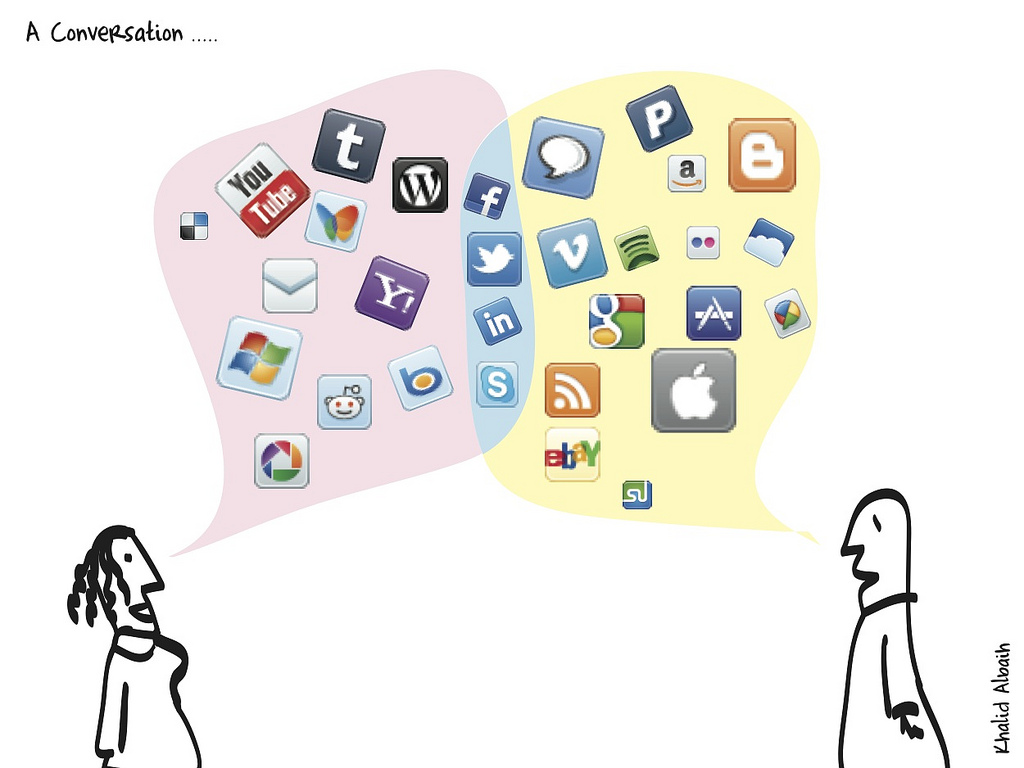
If your brand is on social media, fans expect a conversation, not a one-way broadcast. They’ll use this medium to provide feedback on their customer experience and request assistance when needed. Are you ready to provide a superior customer service experience on social?

"A Conversation" by Khalid Albaih via CC BY 2.0
A Conversation by Khalid Albaih via CC BY 2.0

“Brands that are still refusing to use social for customer care will really start to look foolish in 2016.”  -David Moth, Econsultancy

Speed Matters But So Do Solutions

Yes, timely replies are appreciated but responding immediately is overrated. People want an answer to their question or a solution to their problem. They don’t care whether you tweet them every few minutes that you’re working on their issue. If a solution is going to take some time, respond to give them a time-frame and then provide an update if that changes.    

Respond in the Right Way

If assisting a customer requires sharing sensitive information, move the communication to a private channel. Facebook helped Page administrators earlier this year by adding a Message option to posts and comments. When choosing this response option, a message opens with the post and/or comment included for easy reference and a note is displayed on the Page letting others know that you responded. Twitter also made private communication easier this year with a number of changes, including the ability to receive and reply to Direct Messages from anyone.

Facebook Pages: Now Open for Communication

Don’t Nix Negativity

It’s a judgement call whether the conversation should be made private. However, don’t do it just because a customer makes a negative comment. Resolving an issue in the open can be a boost for your brand and shows others that you’re transparent and willing to correct a poor experience. No brand is perfect but how you handle a negative situation can be the difference between a disgruntled fan and brand evangelist.

Get Social on Social

If possible, keep your communication on social media. This is the medium that your customer chose to use, so don’t just respond with a stock message to call your general customer service number. Your customer may have already tried other routes, so pushing her back to those failed avenues is frustrating and will lead to an even more negative view of your brand.

Providing a superior customer experience on social requires work, but the pay off is worth it. By keeping the four tips above in mind, you can create evangelists for your brand and fans for life.

Let’s get social,
Jaime

Let’s chat (about social media, your marketing needs or otherwise):

Evaluating Feedback: How to Listen to What’s Not Being Said

In our last post, we talked about how the gift-giving process makes you a better marketer. The final similarity discussed was evaluating your feedback, which is crucial to your success in marketing.

Local Call by Wes Peck via CC BY-NC-ND 2.0

The problem is that it can be difficult to evaluate your feedback. Prospects and customers are human, so they’re complex. Perhaps they fit your buyer persona except for one crucial aspect, which is causing your marketing to miss the mark.

Another issue is that human beings want to position themselves in the best light possible. Said another way, peer pressure never goes away. Focus groups can lie, surveys can mislead and customers can tell you they want things that they really don’t.

How can you evaluate feedback from prospects and customers?

  • Develop Buyer Personas, Not Stereotypes — Buyer personas are a fantastic (and necessary) way to attract the right leads, but don’t rely on stereotypes. Research, research, research. You may find subtle differences between members of a persona, so you can adjust your message accordingly.

Why Consumer Intent Is More Powerful Than Demographics

  • Know Your Customers —  Once someone becomes your customer, go beyond the persona. Get to know your customer as much as possible. What keeps her up at night? How does she go about her day? Knowing her hobbies, personality and routine can be the difference between servicing a customer and creating a loyal client.

The Art of Follow-Up

  • Listen (and Pay Attention) — When you’re talking to a customer, listen to what he has to say. Don’t check email or mentally prepare your to-do list for the next day. Focus on your customer. If you’re meeting face-to-face, take in non-verbal clues, such as body language and facial expressions. Listening is an art form that can strengthen relationships and develop trust.

Trust is the most powerful currency in business

  •  Study Psychology — Don’t worry, you don’t need a degree. But understanding basic psychological concepts can help you develop relationships, business or otherwise. Learn about the different types of personalities, how the human brain processes various types of information and how emotions play into our decision-making process.

5 Quirks of the Human Brain Every Marketer Should Understand

Evaluating feedback can be difficult but is a necessary part of the marketing process, especially during the Close and Delight phases. (Huh?) So remember to stay away from stereotypes, get to know your customers, listen and pay attention to them and understand the psychology that drives how human beings think and act. You (and your customers) will be glad you did.

What tips would you add on evaluating feedback?

How do you get to know your customers?

Do you use psychology to do your job?

We’d love to hear your feedback!
Jaime

Let’s chat (about evaluating feedback, your marketing needs or otherwise):

How the Gift-Giving Process Makes You a Better Marketer

I love to give gifts. Part of it is seeing the joy that the recipient expresses, but part of it is the process. Finding the perfect gift for someone isn’t easy and shares a lot in common with the marketing process.

Danbo Santa Claus_Takashi Hososhima_flickr

First, there’s the research into what the recipient likes and how he spends his time. What’s a day in his life like? Is he a workaholic? A teacher by day but writer by night? Doting Dad of two? You need to understand what makes the recipient tick in order to give a meaningful gift.

Sound familiar? Studying a potential gift recipient is a lot like creating a buyer persona or understanding your customer. Step into your prospects’ or customers’ shoes in order to understand what they truly need. What would make their job a little easier? How can you take some stress out of their life?

After doing your research, you need to keep your budget in mind. Sure, it would be great if you could buy everyone a dream vacation or a MacBook Pro, but that’s not always feasible. Don’t be disappointed with your lower budget; just change your level of thinking. Does your friend love to travel? Pick up a scarf with multiple uses or a great travel bag that will be perfect for her next trip.

The same way of thinking holds true in marketing. Budget is always something to keep in mind no matter what yours is. Figure out how to maximize your exposure and effectiveness with what you have to spend. Maybe you can’t afford a digital billboard in Times Square, but you can afford passing out flyers about your new pop-up shop to those in the area.

Another way to expand your budget is to partner with others. So your brother and sister-in-law need a new washer but it’s out of your budget? Get together with family and friends to organize your gift-giving efforts. Everyone can contribute to a ‘new washer fund’ via a crowdfunding source or a group gift card to the appliance store.

The same practice works well in marketing. Partnering with like-minded businesses can expand your reach and your budget. Attend networking functions to find other businesses that you can help and vice versa. The important aspect of any relationship is that both sides are committed and both gain something. If only one business benefits, it’s not a good fit and the relationship won’t last.

Finally, evaluate the feedback. No matter how much you do your due diligence, sometimes you miss the mark. A gift is not well received or the recipient has no use for it. Make note of why the gift failed to live up to expectations so you can improve for the next occasion.

In marketing, sometimes your efforts fail. You can conduct ample research and maximize your budget but your campaign or project may not produce the expected results. Your customers and prospects are people, which means they’re complex. No matter how well researched your buyer personas are, maybe you missed one key aspect.

It’s crucial to examine your feedback so you can improve whatever part of your marketing is lacking to see better results in the future. That’s not always easy but that’s the topic of another article (actually the next one).

Who knew the gift-giving process could make you a better marketer? Maybe that’s why I enjoy it so much. Or maybe it’s because I love to make people smile. Or because I love a good challenge. Regardless, put some thought into your gift giving and marketing this Holiday season and you’re bound to see the results.

p.s. Do you know an entrepreneur or small business owner who could use some marketing help? Give them a gift that will keep on giving long after it’s opened. We offer gift certificates toward any of our services. Let’s talk about your recipient’s business, product or idea, so we can customize a gift certificate for you.

Picture: Danbo Santa Claus by Takashi Hososhima via CC BY-SA 2.0

CCC’s Chief Elf,
Jaime

Let’s chat (about gift giving, your marketing needs or otherwise):
Facebook logo Twitter logo Instagram logo Pinterest logo LinkedIn logo

The Art of Follow-Up

It’s an integral part of the marketing process yet most marketers don’t do it. Unfortunately, not following up on your marketing efforts leads to missed opportunities and sales.

Two cups of coffee on saucers sit on a wooden table while two people carry on a conversation. A smartphone and black glasses lay in the middle of the table next to a plant. One person stirs their coffee while the other gestures with their right hand. Message: The Art of Follow-Up
How do you approach the art of follow-up?

We get it. You’re busy. You meant to follow up on the leads from the tradeshow or a marketing campaign or your latest email newsletter, but other things got in the way. Your boss called. Your kids got home from school. Life happened.

What’s the big deal?

The business-to-business (B2B) buying cycle is longer than business-to-consumer (B2C) and typically involves more people. You have to spend more time nurturing prospects and may have to touch them 7, 8 or 9 times (or more) before getting a sale.

How Many Touches Make a Sale?

While you would love to send out an email newsletter and have your website flooded with orders, that rarely happens. However, with the analytics available today, you can see who opened your newsletter the most and what links they clicked on, along with other data. Follow up with these prospects! They’re interested and may have been interrupted by life before reaching out to you.

“The single biggest problem in communication is the illusion that it has taken place.”  -George Bernard Shaw, author

Now here’s the fun part. How do you consistently follow up with people without being annoying?

  1. Get Social — It’s helpful to be connected to your customers and prospects on social media (business accounts at least), so you can engage with them. Each like of a post or retweet is a soft touch and reminds the person that you’re available.
  2. Note Communication Preferences — You have a slew of communication options at your fingertips today, but your customers and prospects probably have a preference. If Bob prefers Facebook Messenger, send him a message. If Sally would rather talk on the phone, give her a call.
  3. Be Customer-Focused — Yes, you want the sale but that’s not your customer’s or prospect’s issue. Let them know why you’re following up: so they don’t miss incredible savings or show up at their tradeshow next week empty-handed. How is closing this sale going to help them?
  4. Be Flexible — If you’re not hearing back, offer to schedule a quick call or visit when it’s most convenient for your customer or prospect. Let them know that you value their time and will be brief. It may be easier for your customer to meet you at a coffee shop for lunch or talk on their way to pick up their kids after work.

Following up is extra work but it also leads to more opportunities and sales, especially when done right. Use your data to decide where your best opportunities lie, but be human when reaching out to your customers and prospects. The art of follow-up is one of those things that computers just don’t understand, and that’s a good thing. 🙂

Feedback on Following Up

How do you decide when to follow up with customers and prospects?

Have you noticed your customers’ communication preferences?

Do you need more targeted leads to follow up on? CCC is Inbound Certified and we make marketing that people love. Let’s talk about how we can help you. 


Happy Follow-Up Friday!
Jaime

Let’s chat (about follow-up, your marketing needs or otherwise):

Small Business Saturday: FREE Writing Guide

It’s Small Business Saturday, the Saturday after Thanksgiving that is set aside each year to celebrate and support small businesses. We appreciate the love, but we hope that you support small businesses the rest of the year too.

Blue

Why?

  • Nearly 80% of small businesses are self-employed individuals.^
  • Businesses with fewer than 5 employees make up 62% of all businesses in the U.S.*
  • Small businesses employ nearly half of the U.S. private workforce.`
  • Since 1995, small businesses have created 64% of net new jobs in the U.S.`

Who are small business owners? Your sister, father, cousin, landscaper, handyman, dog groomer, designer, accountant and friend. We live in your neighborhood, vote on local issues and help strengthen the local economy.

In honor of Small Business Saturday, we’re giving away a FREE writing guide, The Power of the Pen: 5 Steps to Writing That Produces Results

More people than ever are expected to write today (i.e. blogging, company newsletters, social media), but some people just aren’t comfortable with the written word. We hope this writing guide helps you become more comfortable with your craft and achieve the results you want.

Of course, some people would rather focus on what they do best and leave the writing, marketing or social media to someone else. If that’s you, we’d love to help. Let’s talk to see if we’d be a good fit for you.

Now let’s hit Main Street and support some small businesses today!

A proud small business owner,
Jaime

p.s. Let me know what you think of the writing guide!

Join the conversation: 
Facebook logo Twitter logo Instagram logo Pinterest logo LinkedIn logo

Sources:
^ NASE | * US Small Business Administration | ` Inc.